
Summer is one of the biggest opportunities of the year for holiday lets – but only if your property is ready to be found, trusted and booked at the right moment.
From our recent From Data to Bookings webinar series, one message has been consistent:
Data informs strategy | Visibility gets you found | Confidence gets you booked
This summer isn’t about doing more. It’s about focusing on the right things at the right time – and making small, consistent changes rather than complete revamps – so you can respond to how guests are actually booking today.
Here are five practical ways to do exactly that.
1. Meet demand where it is happening
Summer 2026 is shaping up to be another strong season for UK travel – but booking behaviour continues to evolve.
According to Key Data, trends show booking windows have shortened significantly compared to previous years, with guests waiting longer to commit. Short stays, flexible trips and last-minute decisions are now driving a larger share of summer bookings.
What the data tells us (UK market snapshot)
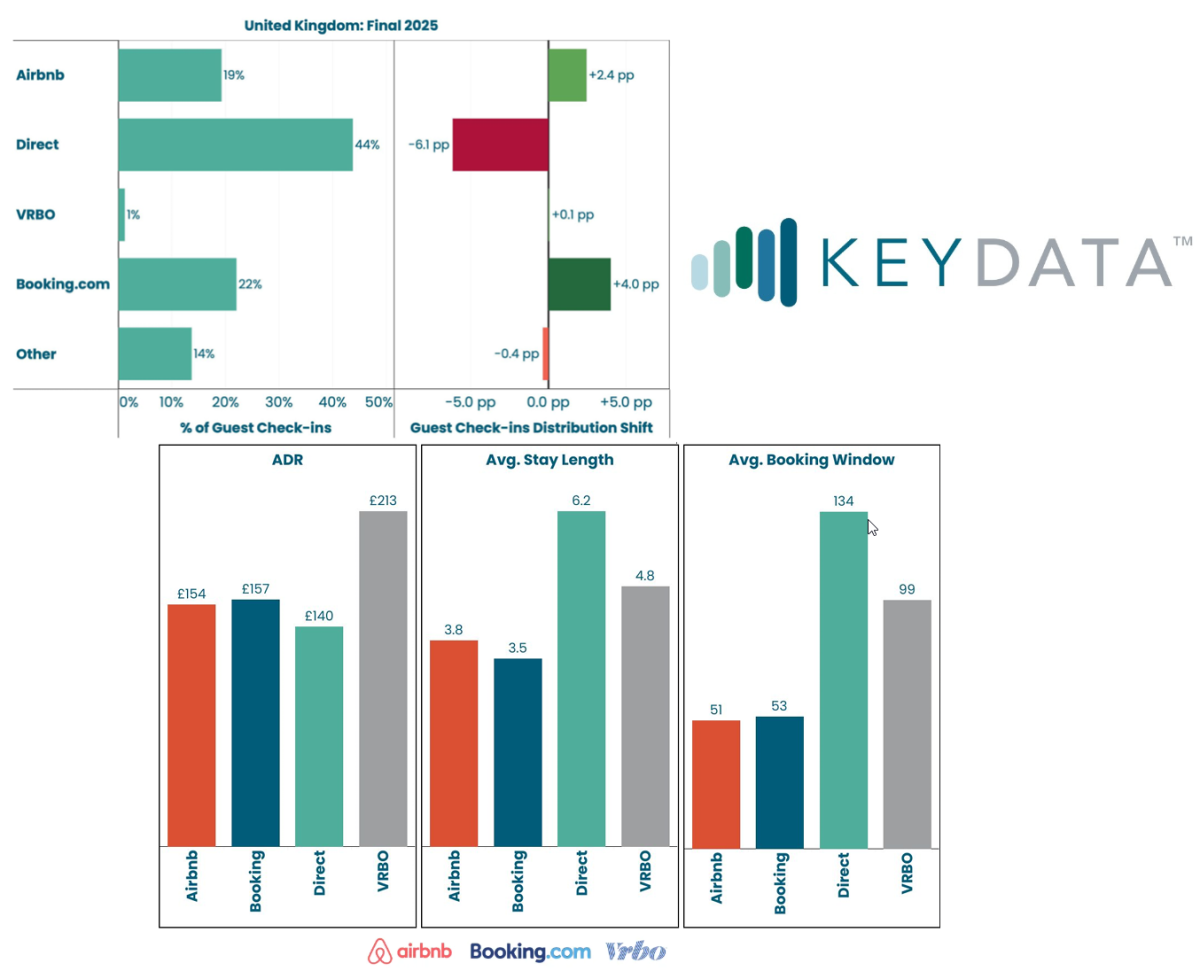
Source: Key Data Dashboard as @22nd March 2026
At the same time, performance across channels varies:
- Airbnb and Booking.com continue to capture shorter booking windows, helping fill last-minute gaps
- Vrbo properties are seeing higher average daily rates, supporting stronger revenue for longer stays and family bookings
- Direct bookings tend to have longer lead times, making them less effective for short-notice demand
Channel distribution data also highlights the importance of visibility across platforms, with OTAs continuing to drive a significant share of bookings, while direct remains important but more dependent on earlier planning.
Tip: Have a clear strategy for your channels and make sure they work for you, not the other way around. Use some to capture last-minute demand and others to support longer stays or higher-value bookings.
2. Adapt your setup for a faster booking cycle
Summer bookers are decisive. They don’t want back-and-forth emails or uncertain calendars.
They want to see availability, feel confident, and able to click “Book Now”.
To capitalize on this, your property setup needs to be friction-free:
- Offer flexible arrival days where possible
- Consider shorter minimum stays to fill gaps
- Enable fast or instant booking options
- Keep availability fully up to date
Importantly, this doesn’t mean removing control. You can offer flexibility without increasing risk – for example, by providing both standard and non-refundable rates to appeal to different types of guests.
Tip: Review your policies. Small adjustments to flexibility and availability can significantly improve both visibility and conversion, especially for late bookings.
3. Refresh and reposition your listings for summer appeal
The fundamentals of a great listing don’t change. clear descriptions, high-quality images, accurate pricing.
But summer demands a fresh perspective.
You’re not just selling accommodation – you’re selling a seasonal experience.
The strongest listings evolve throughout the year to match how guests are browsing.
For summer, focus on:
- Highlight outdoor spaces: gardens, patios, balconies, local beaches, parks.
- Promote seasonal features and extras: BBQs, outdoor dining sets, nearby summer events.
- Emphasise convenience: proximity to beaches, family attractions, walking trails, pet-friendly spaces.
Small tweaks here can make a big difference in search results and conversion rates.
Tip: Reframe your listing titles and descriptions for summer browsing.and make sure all relevant amenities are selected. Clear, specific positioning helps you stand out in search and improves conversion. Think “Seaside retreat for family adventures” or “Relaxed summer weekends just minutes from the coast”.
4. Stay flexible on price without undervaluing
Pricing plays a key role in both visibility and perception.
It doesn’t just influence whether a guest books – it influences how often your property appears in search and how it compares to others.
Staying competitive means staying aligned with demand:
- Adjust pricing for unbooked dates
- Use targeted discounts to fill gaps
- Increase rates as availability tightens
- Review performance regularly
This isn’t about lowering prices – it’s about maintaining the right position in the market.
Tip:
Focus on perceived value as much as price. Guests are comparing more, so clarity and competitiveness matter. Clear pricing, aligned with demand, helps improve both visibility and perceived value.
5. Stay in control as demand increases
Scaling up visibility is only effective if you stay in control behind the scenes.
Without the right systems in place, issues can escalate quickly:
- Double bookings across platforms
- Calendar discrepancies
- Pricing inconsistencies
- Missed guest enquiries (leading to bad reviews)
And during peak season, these are far harder (and more costly) to fix.
Tip: Make sure your channel manager or property management system fully synchronises your listings, calendars, and prices so your focus stays on guests and operations, not firefighting admin issues.
Catch the summer wave
Summer success doesn’t come from one big change. It comes from getting the fundamentals right and making small, timely adjustments:
- Distributing strategically: Be visible where guests are searching
- Offering flexibility without chaos
- Present your property clearly and confidently
- Pricing intelligently
- Refreshing your appeal for a summer audience
- Stay in control as bookings increase
- You’ll position yourself not just to survive the season but to thrive through it.
The most successful clients aren’t doing more – they’re doing the right things, consistently. Because the best way to enjoy the peak season? Paddle out prepared and ride the wave all the way in.
Ready to work smarter, not harder this peak season?
Explore how to apply these strategies using SuperControl’s tools and integrations.

